[Security Brief] - P1 - TOCTOU Attacks
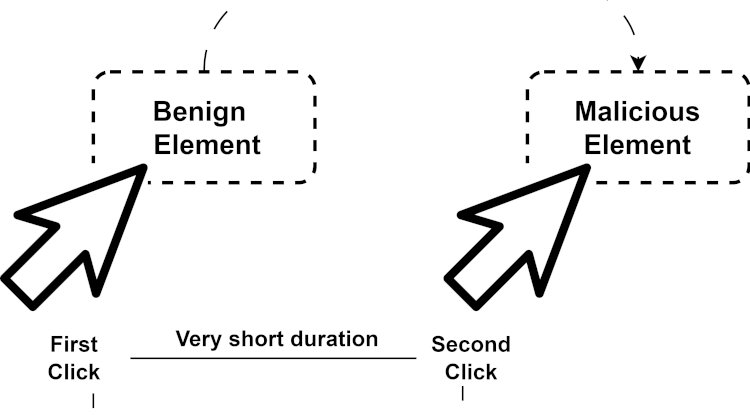
The TOCTOU (Time of Check to Time of Use) attack stands out as a unique and intriguing challenge in the vast landscape of cybersecurity threats. It exploits the minuscule time gap between a system's data access verification and the actual use of that data. In this article, we'll delve deep into what TOCTOU attacks are, why they're problematic, and illustrate the concept with some simple examples.

Understanding TOCTOU (Time of Check to Time of Use) Attacks
The TOCTOU (Time of Check to Time of Use) attack stands out as a unique and intriguing challenge in the vast landscape of cybersecurity threats. It exploits the minuscule time gap between a system's data access verification and the actual use of that data. In this post, we'll delve briefly into what TOCTOU attacks are, why they're problematic, and illustrate the concept with some simple examples.
1. What is TOCTOU?
TOCTOU is a specific type of race condition, a scenario in computer programming where two or more processes access and modify data concurrently, leading to unpredictable or undesired outcomes. In a TOCTOU attack, the discrepancy lies between the moment a system checks data (like verifying access permissions) and the subsequent moment it uses that data (like reading or writing).
2. Why is TOCTOU problematic?
The crux of the problem is that most systems assume that the state of the data remains unchanged between the check and the use. However, if an attacker can intervene in that tiny window, they can exploit the system in malicious ways.
3. Examples of TOCTOU Attacks
Example 1: File Access in an Operating System
Imagine you're about to open a document on your computer. The operating system checks if you have the appropriate permissions to access the file. Just after this check, but before the file is actually opened, an attacker quickly replaces the original file with a malicious one. The system, believing it's opening the verified file, inadvertently opens the malicious one instead.
Example 2: Online Banking Transaction
Consider an online banking scenario. You decide to transfer $100 to a friend. The banking system first checks your balance to ensure you have enough funds. In the brief moment between this check and the actual transfer, an attacker modifies the transaction amount to $1000. If the system doesn't re-verify the details just before the transfer, it will send $1000 instead of the intended $100.
4. Defending Against TOCTOU Attacks
The key to defending against TOCTOU attacks is to minimize the window of opportunity for attackers. This could be achieved through:
- Atomic Operations: Ensuring that the check and use operations are atomic, meaning they're indivisible and uninterruptible.
- Re-verification: Before executing the 'use' action, re-verify the conditions that were checked.
- User Notifications: Alerting users about critical operations allows them to confirm or deny actions.
Conclusion
TOCTOU attacks exploit the inherent assumption that the data state remains unchanged between its check and use. By understanding this vulnerability and implementing robust safeguards, systems can be better protected against these subtle yet potentially devastating attacks.
What's Your Reaction?