Birthday Attack: Exploiting Probability in Cryptography
The Birthday Attack holds a unique position in the diverse landscape of cybersecurity threats. Unlike brute-force or sophisticated algorithmic attacks, it exploits the mathematical principles of probability, particularly the birthday paradox. This post delves into what a Birthday Attack is, its relevance in cryptography, and how it challenges the integrity of cryptographic systems.
Understanding the Birthday Paradox
The birthday paradox asks a seemingly simple question: In a room of how many people, is there a 50% chance that at least two individuals share the same birthday? Surprisingly, the answer is just 23 people. This counterintuitive result arises due to the number of possible pairings between individuals, which grows rapidly as more people are added. For a room of 75 people, the probability jumps to over 99%. This is known as the birthday paradox.
What is a Birthday Attack?
A Birthday Attack in cryptography involves finding two different inputs that produce the same hash output in a hashing algorithm. This attack leverages the principle of the birthday paradox to find these collisions faster than would be expected by random chance.
How Does a Birthday Attack Work?
-
Hash Functions: In cryptography, hash functions are used to create a fixed-size string (a hash) from variable-size input data. Ideally, each unique input should produce a unique hash.
-
Finding Collisions: The attack seeks to find two different inputs that result in the same hash output. The probability of finding such a collision is much higher than intuitively expected, similar to the birthday paradox.
-
Probability Advantage: For a hash function that produces a hash of n bits, a birthday attack can find a collision in approximately 2^(n/2) operations rather than 2^n operations, as one might expect with random guessing. If it is difficult to understand, think this way: In computing, 2^n means you are looking at all possible combinations for an n-bit hash. This number grows exponentially with n, making it virtually impossible to check all combinations for large n. However, due to the way probabilities work in the context of the birthday attack, you only need to check about the square root of that number of combinations (that's what 2^(n/2) means) to find two different sets of data that have the same hash. This is much fewer than checking all possible combinations 2^n.
The same principle applies to finding hash collisions. If an output digest is 128 bits long, there are 2^128 possible values. Brute forcing a collision would take an infeasible amount of time.
But with the birthday attack, you only need to calculate the digests for a sample of inputs and then compare them. You don't need anywhere close to 2^128 samples. The math works out such that only about 2^64 digest calculations are needed to have a good chance of finding a collision. This dramatically reduces the complexity.
Implications in Cryptography
-
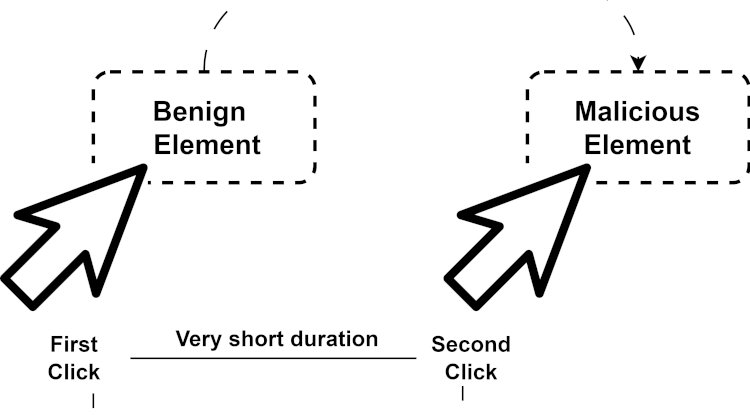
Digital Signatures: Birthday attacks can potentially compromise digital signatures by finding two messages with the same hash, one benign and one malicious.
-
Certificate Authority: The attack could undermine the trust in certificate authorities if generating two certificates with the same hash is possible.
-
Data Integrity: Any cryptographic system relying on hash functions for data integrity might be vulnerable to birthday attacks.
Mitigating Birthday Attacks
-
Using Stronger Hash Functions: Employing hash functions with a larger hash output size can make birthday attacks more difficult.
-
Regular Updates: As hash functions become vulnerable over time, staying updated with the latest, most secure algorithms is essential.
-
Awareness and Design Consideration: Cryptographers and security professionals must know the potential for birthday attacks in their system designs.
Simple Example in Python
import hashlib

def birthday_attack(digest_size, sample_count):

  # Initialize a set to store digest values
  digests = set()

  # Generate a sample of random inputs
  inputs = []
  for i in range(sample_count):
    inputs.append(str(i))

  # Calculate the digest for each input
  for item in inputs:
    digest = hashlib.sha256(item.encode('utf8')).hexdigest()
    digests.add(digest)

  # Check if digest set contains any collisions
  if len(digests) < len(inputs):
    print("Collision found!")
  else:
    print("No collisions found")

birthday_attack(256, 50000)
This code calculates 50,000 digests and checks if any duplicates were found, which would indicate a collision. For a 256-bit digest, only about 65,000 samples are needed on average before a collision occurs.
Conclusion
The Birthday Attack is a fascinating example of how mathematical concepts can be applied to cybersecurity. It highlights the need for robust cryptographic practices and constant vigilance in the ever-evolving field of cybersecurity. By understanding and accounting for these probabilistic vulnerabilities, we can better secure our cryptographic systems against such ingenious exploits.
------------------------------------------------
[Security Brief] - P12 - Fragment Attack
[Security Brief] - P11 - Zero Trust Architecture (ZTA)