[A Side Story] - The AI ABC's: Adventures in Algorithms with Pakia & Chamander
Artificial Intelligence (AI) often appears complex and intimidating, filled with intricate algorithms and technical jargon. However, by breaking down these concepts into simple, relatable examples, we can make AI accessible and even fun. In this blog, we'll explore 18 common AI algorithms through a lively and humorous dialogue between Prof. Pakia, a witty AI expert, and Chamander, a curious and somewhat naive individual. Using everyday scenarios like predicting the weather, training a dog with treats, and finding friends with similar hobbies, we'll demystify these algorithms, making them easy to understand and engaging for everyone.
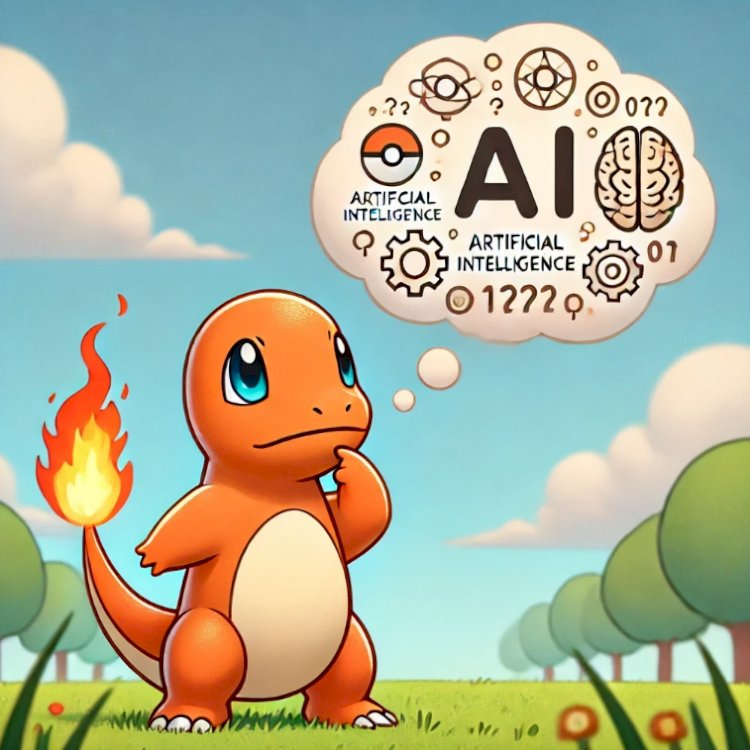
Prof. Pakia: Good morning, Chamander! Welcome to our AI Adventure. I hear you're curious about AI algorithms. Where would you like to start?
Chamander: Good morning, Professor! I'm a bit overwhelmed. There are so many algorithms! Can we start with something simple?
Prof. Pakia: Of course! Let's begin with how AI learns, just like we do. This is where Neural Networks come in. They function much like our brains, learning from examples and experiences.
Chamander: Fascinating! But how does AI remember things, like I do when reading a book?
Prof. Pakia: Excellent question! That's where Recurrent Neural Networks come in. Imagine you're reading a mystery novel. Just as you use earlier chapters to understand the current one, these networks use past information to interpret the present.
Chamander: Cool! Now, I often try to predict the weather based on my experience. Does AI do something similar?
Prof. Pakia: Absolutely! That's akin to Naive Bayes. It uses known information to make educated guesses about the unknown, just like you do with weather prediction.
Chamander: That makes sense! Oh, I love maze games. Is there an AI for that?
Prof. Pakia: Indeed there is! It's called Q-Learning. Picture yourself in a maze, trying different paths and remembering which ones work best. That's exactly how Q-Learning operates, finding the optimal path through trial and error.
Chamander: I see! How about teaching AI, like how we train dogs?
Prof. Pakia: That's Reinforcement Learning. Just as we reward a dog for doing the trick correctly, we "reward" AI for making good decisions. It learns through trial and error, always aiming to get more "treats."
Chamander: Now, I have this messy toy box. Is there an AI that could help me organize it?
Prof. Pakia: Indeed there is! It's called K-Means Clustering. Picture this AI as a helpful friend who sorts your toys into groups based on similarities.
Chamander: That would save me so much time! But what if I have a really long story and I need to summarize it?
Prof. Pakia: For that, we have Principal Component Analysis. It's like having a super-efficient assistant who can take a long, complex story and boil it down to the most important points.
Chamander: Amazing! Oh, I've been measuring my height every year. Is there an AI that could predict how tall I'll be?
Prof. Pakia: Indeed there is! That's what Linear Regression does. It looks at how you've grown in the past to predict your future height.
Chamander: Interesting! How about finding new friends at school?
Prof. Pakia: That's a perfect analogy for the K-Nearest Neighbors algorithm! It finds the most similar data points, just as you might look for classmates with similar interests.
Chamander: Cool! But what if I can't decide which game to play and I want to ask all my friends?
Prof. Pakia: That's a great analogy for Random Forests! This algorithm is like asking many friends for their opinions before making a decision.
Chamander: I see! Now, how does AI recognize my friends in photos?
Prof. Pakia: That's the job of Convolutional Neural Networks. They're experts at image recognition, much like how you can spot your friends in a crowded photo.
Chamander: Fascinating! You know, I love playing "20 Questions" to guess objects. Is there an AI version of that?
Prof. Pakia: Absolutely! That game is very similar to how Decision Trees work. A Decision Tree asks a series of yes/no questions to reach a conclusion, just like in your game.
Chamander: That makes so much sense! Another question - how does AI get better at tasks over time?
Prof. Pakia: That's where Gradient Boosting comes in. Imagine you're learning to play a musical instrument. You improve by correcting small mistakes each time you practice. Gradient Boosting works similarly.
Chamander: Wow, Professor! This has been an amazing journey through AI algorithms. You've made them so easy to understand!
Prof. Pakia: Chamander, you've been doing great! Shall we explore a few more algorithms?
Chamander: Absolutely, Professor! What else can you teach me?
Prof. Pakia: Well, have you ever played a detective?
Chamander: Oh yes, I love solving mysteries!
Prof. Pakia: Then you'll love Bayesian Networks. Imagine you're investigating a crime. You gather different clues and consider how they relate to each other to reach a conclusion. That's exactly what a Bayesian Network does - it looks at multiple factors to calculate the likelihood of an event.
Chamander: That sounds exciting! But what if I'm trying to sort different types of candy?
Prof. Pakia: For that, we have Support Vector Machines. Picture yourself drawing a line to separate two different groups of candies - let's say chocolate and fruit candies. The Support Vector Machine tries to find the clearest, widest boundary between these groups.
Chamander: Yummy! Now, I've always wondered - could we create a superhero by combining the best traits of other heroes?
Prof. Pakia: What an imaginative question! That's actually quite similar to how Genetic Algorithms work. These algorithms mix and match different solutions - like combining superhero traits - to create an optimal result.
Chamander: Amazing! Oh, I almost forgot - I love playing "Look and Draw." Is there an AI version of that?
Prof. Pakia: Indeed there is! That game is similar to how Autoencoders work. These AIs look at an image, remember its key features, and then try to recreate it. It's like compressing information and then expanding it again.
Chamander: Fascinating! One last thing - sometimes, I need help making simple yes or no decisions. Does AI have something for that?
Prof. Pakia: Absolutely! That's where Logistic Regression comes in. Think of it as a digital scale that only measures "yes" or "no." It's like asking, "Will it rain today?" The algorithm weighs the evidence and gives you a simple yes or no answer.
Chamander: Wow, Professor! We've covered so many algorithms. It's incredible how AI can do so many different things!
Prof. Pakia: Indeed, Chamander. AI is a vast and fascinating field. Each algorithm has its own strengths and applications. Remember, what we've discussed are simplified explanations, but they capture the essence of how these algorithms work.
Chamander: Thank you so much, Professor. This journey through the world of AI algorithms has been amazing!
Prof. Pakia: You're most welcome, Chamander. Your curiosity and enthusiasm make you an excellent student. Keep exploring and asking questions - that's the best way to learn about AI and any other subject!
What's Your Reaction?